Florida Temperature and Rainfall Guide
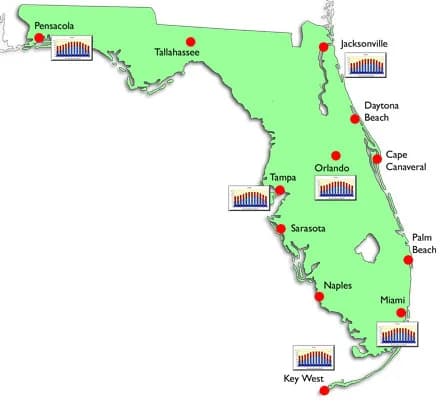
Florida weather changes more by region and season than many first-time visitors expect. The state stays warm year-round compared with much of the US, but North Florida, Central Florida, South Florida, and the Gulf and Atlantic coasts do not all behave the same way.
This page is the quick gateway. Use it to understand the broad statewide pattern, then jump to the city guide that best matches your trip.
The simple statewide pattern
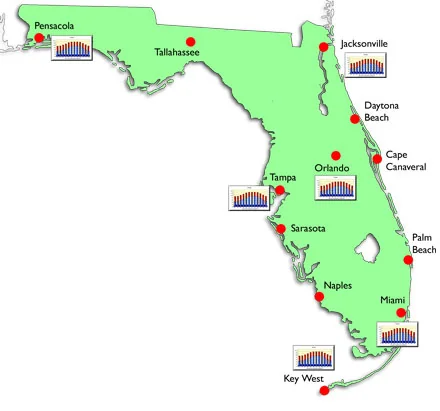
- North Florida: cooler winters, a better chance of chilly mornings, and a less tropical feel.
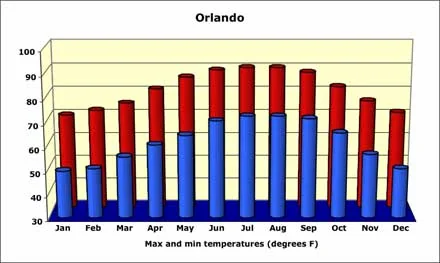
- Central Florida: classic hot, humid summers with regular thunderstorm afternoons and mild winters.
- South Florida and the Keys: warmer winter conditions and a more consistently tropical feel.
- Statewide: the wettest period is generally from late spring into early autumn, while the Atlantic hurricane season runs from June 1 to November 30.
If you are still choosing travel dates, read this together with our Florida seasons guide, Florida weather overview, and hurricane guide.
Jump to the weather guide you actually need
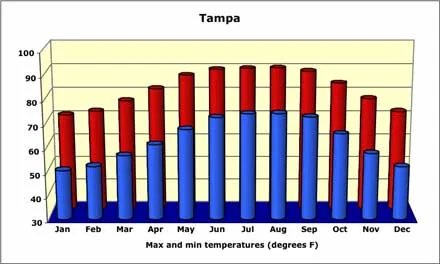
- Tampa, Clearwater and St Petersburg weather
- Orlando and Central Florida weather
- Miami and South Florida weather
- Jacksonville and Northeast Florida weather
- Pensacola and Northwest Florida weather
How to use averages sensibly
Average temperature and rainfall guides are best for choosing your month and region, not for predicting the exact weather on your travel dates. A hot Florida day can still bring a sharp storm later in the afternoon, and a pleasant winter trip can still include a cooler evening in North or Central Florida.
That is why the best planning approach is: use climate averages for timing, use regional guides for destination choice, and then check the live local forecast close to travel.
See also: Best Time to Visit Florida | Central Florida | Florida Keys